Analysis of 5000+ Malicious Open Source Packages
TL;DR
- We analyzed a total of 5,576 open source packages from DataDog Malicious Packages Dataset(opens in new tab).
- 96.2% of the packages were detected as malicious by our code scanning engine.
- 64% (3,611) were from
npmand 35% (1,965) were fromPyPIamong the malicious packages. - 71.9% of the detections were with high confidence with multiple signals and evidence.
- T1041 – Exfiltration Over C2 Channel(opens in new tab) was the most common TTP.
- The top two behaviors were
exfiltration via Burp Collaboratorandpre-install command execution in NPM scripts. - 90% of the malicious packages were very small in size (< 10KB).
- 44 clear typosquatting attempts on popular libraries (e.g.
beautifulsoup‑numpy,djangoo). - 10 YARA rules matched > 75% of the malicious packages indicating common TTPs.
Key Findings at a Glance
TTPs
The Top 10 YARA rules that matched > 75% of the malicious packages are shown below. The rules were curated from the YARA Forge(opens in new tab) project. This is an indicator of most common TTPs used by malicious actors.
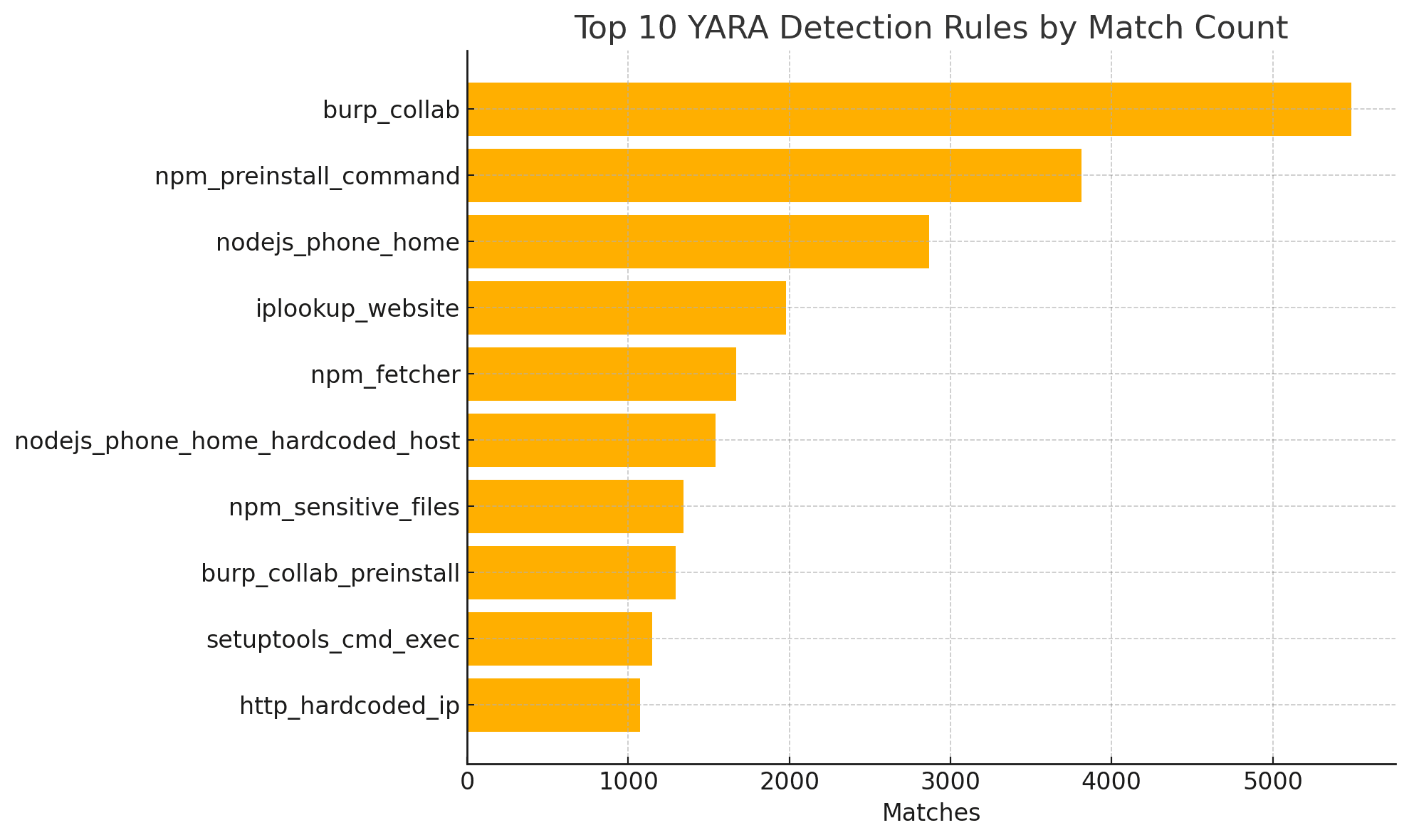
The burp_collab rule match is an indicator of attackers leveraging Burp Collaborator(opens in new tab) for exfiltration of data. In our past research, we identified multiple malicious packages that use Burp Collaborator for exfiltration of data.
The following table shows the MITRE ATT&CK mapping(opens in new tab) for the top behaviors.
Signals by File Extension
The distribution of file extensions that contributed to evidence (signals) based on which a package was classified as malicious are shown below.
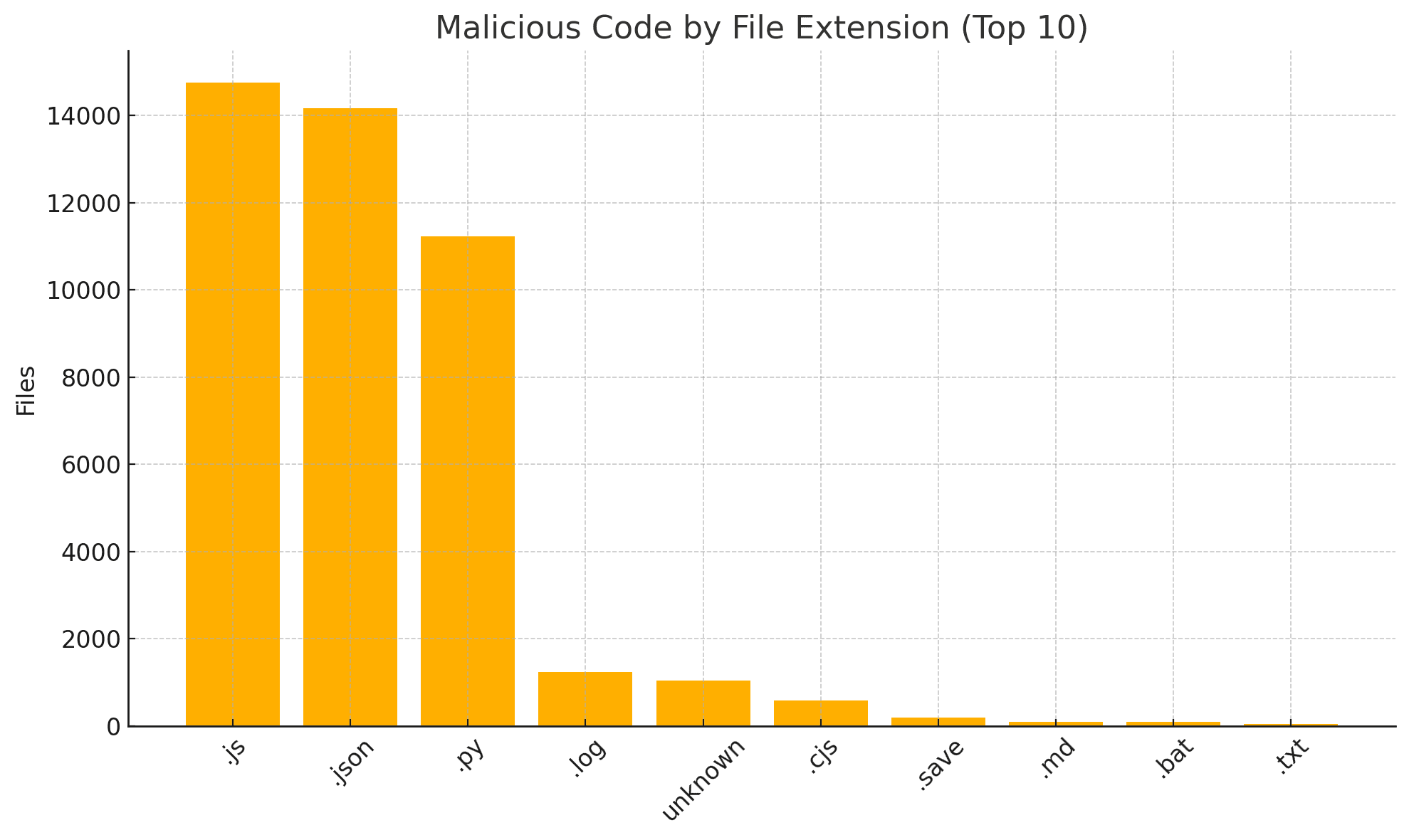
The JSON files are classified due to extensive use of npm install hooks in package.json files.
Size of Malicious Packages
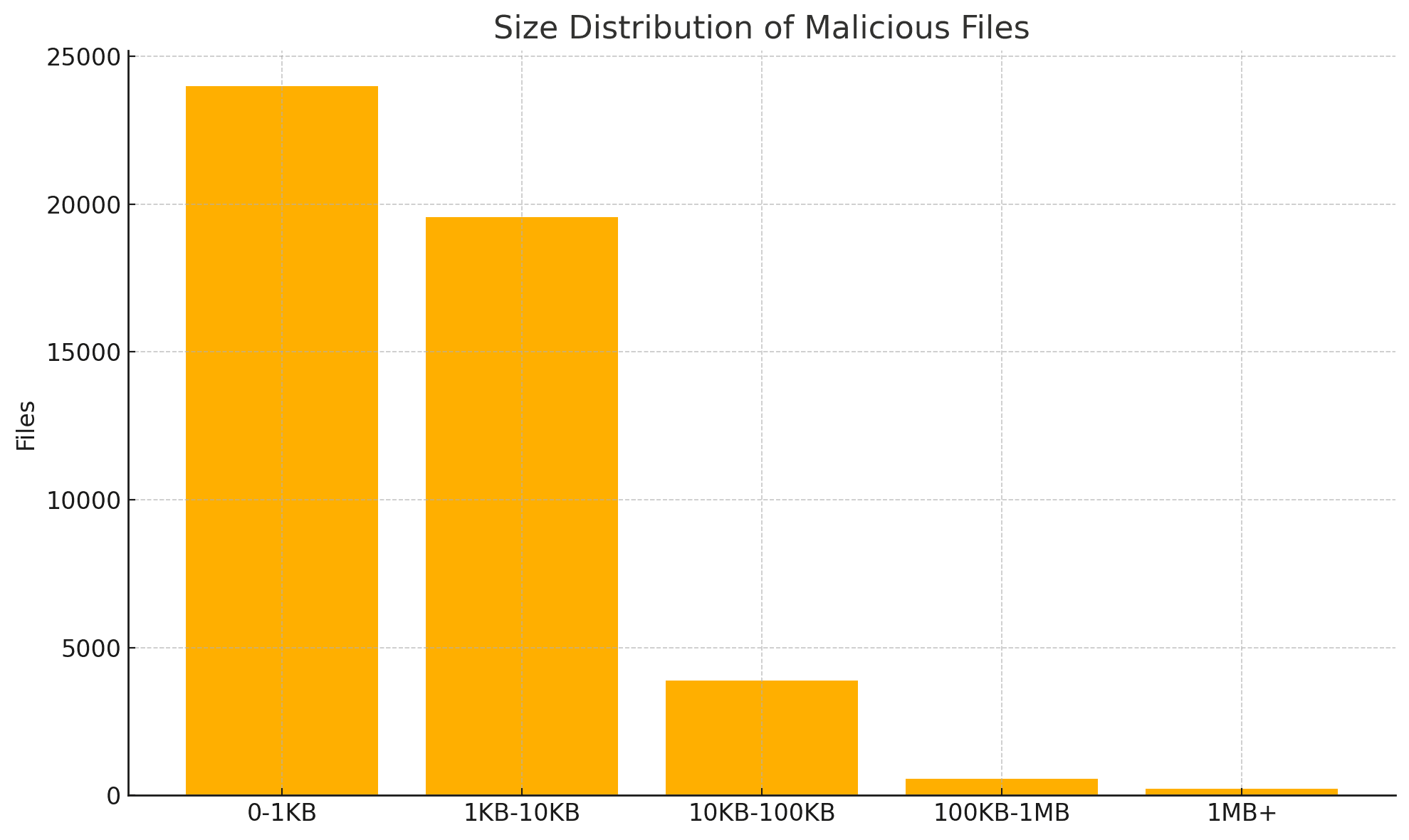
Interestingly, the size of the malicious packages is very small with 90% of them being less than 10KB.
Typosquatting
Typosquatting is a technique used by attackers to trick users into installing malicious packages. In this technique, attackers create packages that are similar to popular packages but with a few characters changed. Below are the most common typosquatting attempts on popular libraries:
Common patterns observed:
- Double letters or missing letters (
expresss,reqests,djangoo,flaskk) remain the easiest way attackers catch fat‑finger installs. - Version oriented bait (
pandas3) and combo bait (beautifulsoup‑numpy) try to appear “new” or “feature‑rich.”
Dependency Confusion
Dependency Confusion Attacks(opens in new tab) were another most common technique observed in the dataset. Following are some of the examples based on unusually high version numbers:
While the examples are insufficient, the common observation is red teamers often use high version numbers in dependency confusion attempts to gain access to the target organization.
Background
We at SafeDep build and maintain a code analysis engine optimized for scanning open source packages for malicious code. This engine uses a hybrid approach consisting of:
- YARA Forge(opens in new tab) rules for detecting known malicious patterns
- Static code analysis for identifying code blocks that perform specific operations (e.g.
network:connect,fs:write,process:execetc.) - LLM based code analysis for basic block of code that are potentially malicious based on [1] and [2]
We use this code analysis engine to continuously scan all open source packages published to supported registries such as npm, PyPI, RubyGems etc. Data from this analysis engine is used by vet(opens in new tab), our free and open source supply chain security tool to protect users against malicious OSS packages in near realtime.
Evaluation Dataset
The LLM usage in the analysis workflow makes the overall system probabilistic due to the inherent nature of LLMs. To be able to maintain and improve quality of analysis, we needed an evaluation dataset. DataDog’s Malicious Packages Dataset(opens in new tab) was a right fit for our needs.
Methodology
The analysis was performed using the SafeDep Package Analysis(opens in new tab) engine with necessary customizations to support the analysis of malicious packages from zip files instead of analysing artifacts directly from package registries. The reason being, many of the malicious packages in the dataset are already removed from the package registries due to being malicious.
The following customizations were made:
- Originally supports OSS package scanning directly from package registries
- A custom script to extract zip files with
infectedpassword from input DataDog’s malicious packages dataset into local file system - A custom adapter to read package files from local file system
- Scan the local packages using the SafeDep Package Analysis engine
While the scanning engine that we used is not open source at this time, anyone can use it with vet(opens in new tab), our free and open source supply chain security tool. Developers can build custom tools using the Package Analysis API(opens in new tab).
Conclusion
While the goal of this analysis was to evaluate and create a benchmark for our code analysis engine, the results are useful for the community to understand the nature of malicious open source packages and how they are distributed in the wild. In fact, this analysis helps us fine tune our analysis engine to be more accurate and reduce false positives. Interested readers can use the data for their own analysis and research.
- vet(opens in new tab) integrates with the analysis API to protect against malicious OSS packages in CI/CD pipelines.
- Documentation(opens in new tab) on how to use malicious package analysis service
- vetpkg.dev/mal(opens in new tab) is an example app built to show most recently analyzed OSS packages
- npm
- pypi
- analysis
- malware
- research